Inside a Walker’s Point studio where neurodivergent youth learn design, animation, and creative technology by starting with what they already love.
On a Saturday morning in Walker’s Point, the Eagleknit building hums. Mentors set up workstations. Students arrive. Some walk in fast, heading straight for the screens. Others take a moment at the door.
Within ninety minutes, they will be presenting their work in front of the room.
For many of them, that would have been unthinkable six months ago.
The Starting Point
Islands of Brilliance was not built from a policy paper or a gap analysis. It started with a nine-year-old watching his father work.
Mark Fairbanks, co-founder and executive director of Islands of Brilliance, was a creative director in advertising when his youngest son Harry, who had been identified as autistic just before age three, looked over his shoulder at Adobe Illustrator and asked to try it. Fairbanks gave him five minutes of instruction and stepped away. Half an hour later, Harry came back with a recognisable illustration of Percy the train. He had used tools his father hadn’t shown him yet.
“I couldn’t get him off my computer,” Fairbanks said.
His wife Margaret was pursuing her master’s degree in special education. The question they began asking together was straightforward: what if a program existed where kids with autism could use their specific areas of passion to learn professional creative tools?
Fairbanks and his wife Margaret co-founded the organization in 2012.
What They Built
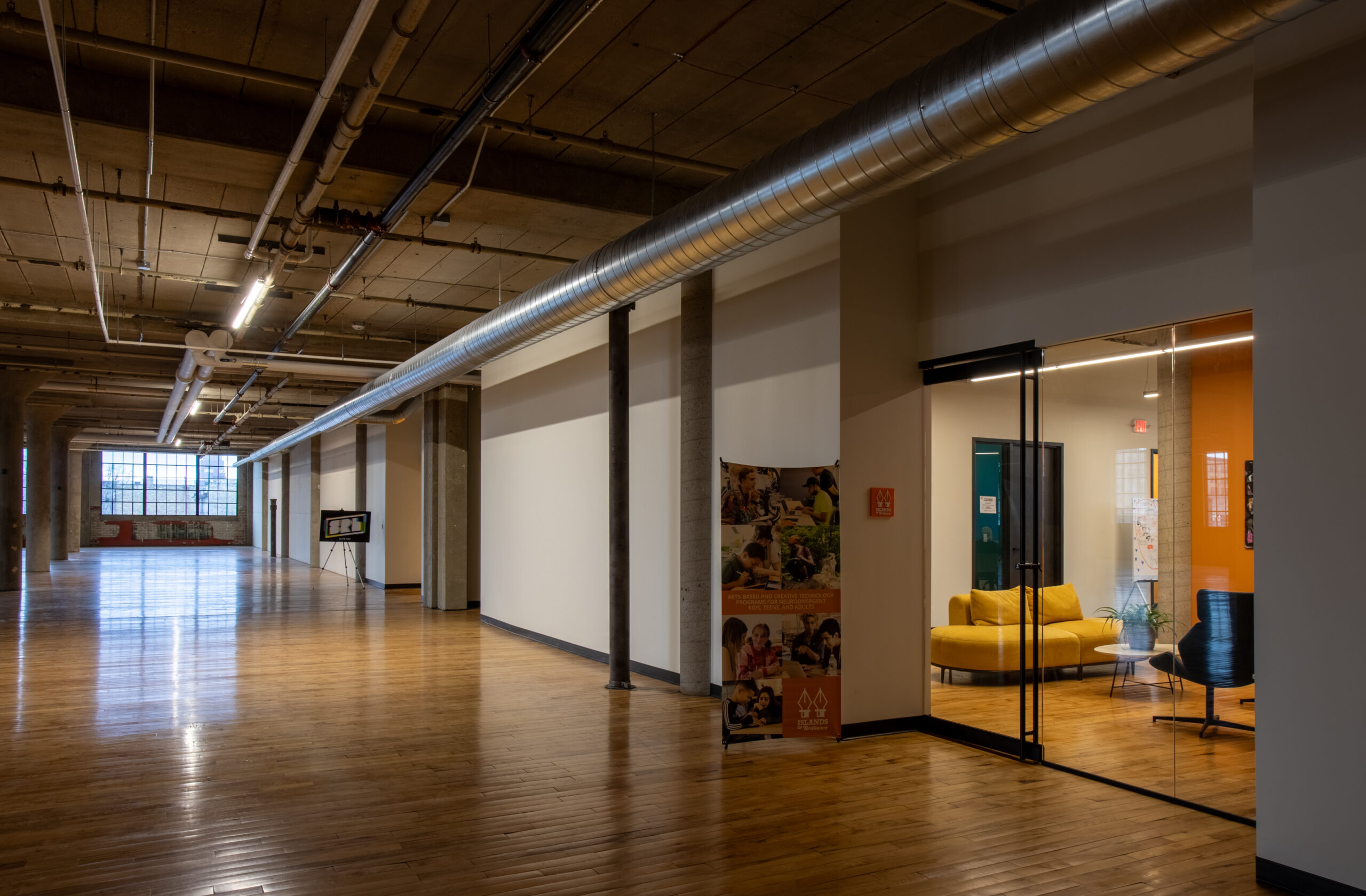
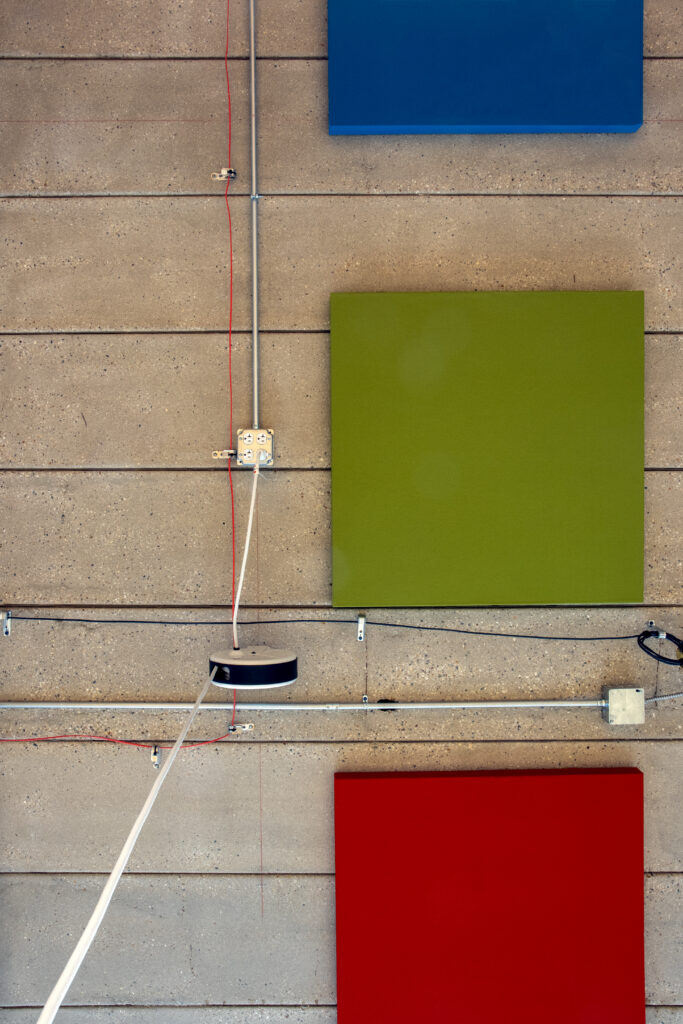
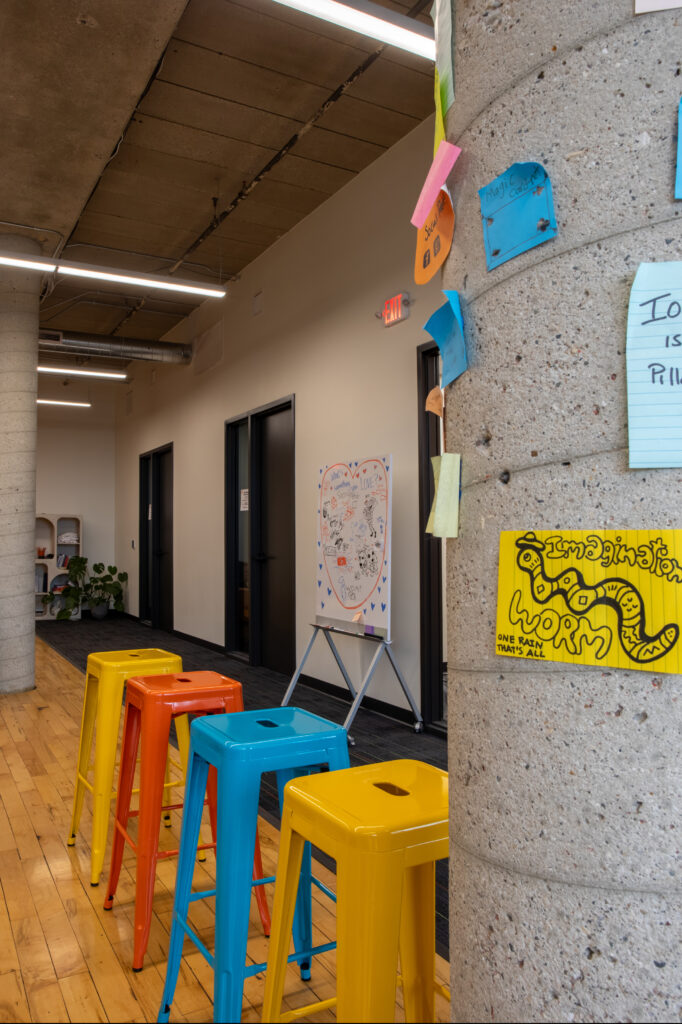
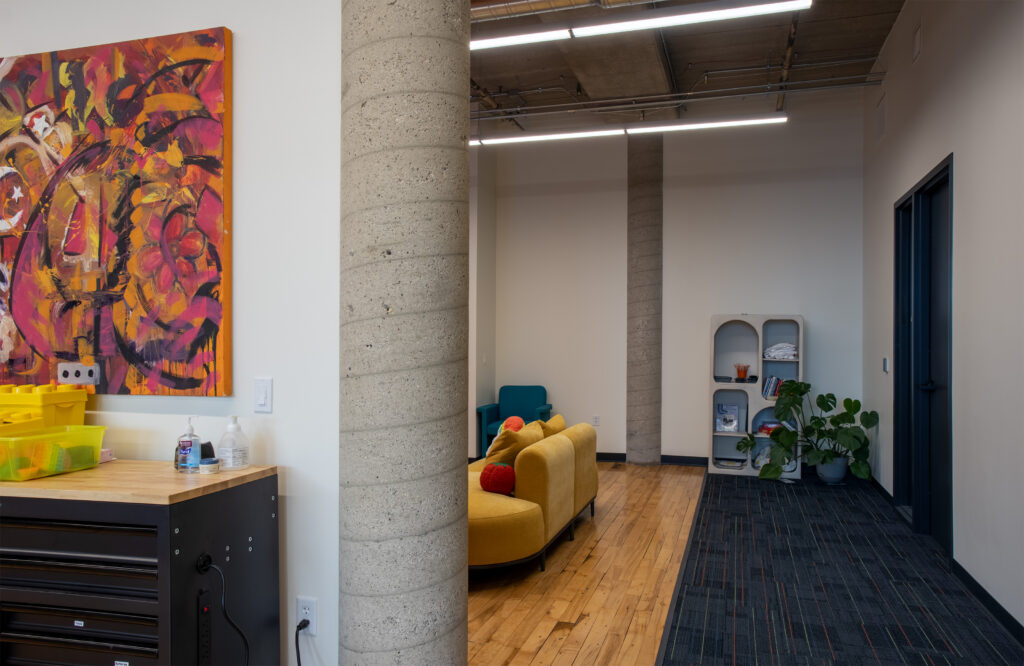
Today, IOB operates out of a studio on the third floor of the Eagleknit building at 507 S. 2nd Street in Walker’s Point. The space was designed with neurodivergent learners in mind: acoustic panels on the ceiling, flexible furniture, huddle rooms for students who need quieter environments, and natural light throughout.
The programming runs across three tracks: 2D work including illustration and design, 3D modeling, and what the organization calls 4D, which covers media, animation, and storytelling. Students work in Photoshop, Illustrator, Procreate, and Blender, among other professional tools. They are guided 1-to-1 by mentors drawn from Milwaukee’s creative and technology industries.
The throughline is what IOB calls a SpIn, short for Special Interest. If a student loves Pokémon, Pokémon becomes the basis for a design project. If they love trains, trains become the subject of an animation. The interest is not a distraction from the learning. It is the learning.
“We’re building off of their strengths and allowing them to flourish. This is a space of belonging for them because they have unique interests and abilities, and they are celebrated for what they are capable of.”
Students range in age from eight to their mid-thirties. Some are working toward post-secondary education. Others are building confidence in structured environments for the first time. The program meets them where they are.
A Different Framework
For decades, the dominant model of autism education has centered on behavioral intervention and accommodation. The focus is on identifying what a student cannot do and building supports around the deficit. Islands of Brilliance starts from a different premise entirely.
“The biggest difference between what we do and what you see in a traditional education setting is that we’re building off of strengths,” Fairbanks said. “We’re not trying to fit them into a box.”
The model has a name in the research literature: strengths-based learning. But at IOB it operates less as a philosophy and more as a structural design. Social-emotional skills like collaboration, self-confidence, presentation, and project management are not taught explicitly. They are built into the experience itself.
“You’re actually getting reps in all of these things without ever realizing it,” Fairbanks said. “You’re not doing a social skills class. You’re doing project-based work where that is just inherently part of the experience.”
The results surface in specific, observable ways. A student who could not be in the room at the beginning of a session is, eighteen months later, presenting work to a full studio. A student who would not share their project stands up in front of forty people. These progressions are not anomalies. They are regular enough that the IOB staff documents them in weekly team meetings through what they call two-minute stories.
The Numbers Behind the Need
The unemployment rate for autistic and neurodivergent adults in the United States is estimated between 50 and 85 percent. That figure is not a condition of ability. It is a condition of preparation, environment, and expectation.
IOB does not position itself as a workforce pipeline. Fairbanks is direct about that. The organization’s focus is on what he calls environmental stamina: the ability to function in a structured setting, to collaborate, to complete projects, to inhabit a workspace. Without that foundation, employment is not a realistic next step for many students.
“If you struggle with anxiety or mental health, you’re probably not going to be able to function in a workplace,” Fairbanks said. “So we want to create a space first and foremost where you feel comfortable, where you can thrive, and where you can build that stamina.”
Fairbanks points to a survey conducted by the Wisconsin Department of Public Instruction, Department of Health Services, and Department of Vocational Rehabilitation in which 20 percent of the 6,000 autistic high school students surveyed expressed interest in pursuing post-secondary education in creative fields, the same fields IOB teaches. He also cites data suggesting that at design programs across the country, 35 percent or more of incoming students now identify as neurodivergent.
The creative economy is already drawing neurodivergent talent. IOB has been building toward that intersection since 2012. The next question is what that means at scale.
Research and Replication
To answer that, IOB partnered with UW-Milwaukee to launch the Autism Brilliance Lab for Entrepreneurship, known as ABLE. The lab is funded by the National Endowment for the Arts, which awarded an initial $150,000 grant in 2022, renewable across multiple years. The goal is not to prove that the program works. The practitioners already know that it does. The goal is to understand why, precisely enough that it can be replicated elsewhere.
The research has produced published work in peer-reviewed journals including PLOS One, Good Autism Practice, the Journal of Creativity, and the Interdisciplinary Journal of Partnership Studies. The organization has also presented findings at state and national conferences. ABLE is currently in its third funded study, evaluating a statewide fellowship program for neurodivergent teens and young adults, with research running through 2026.
“Research is critical not so much to the growth of the organization, but to the growth and understanding of neurodivergent and autistic individuals,” Fairbanks said. “How they best learn. How they flourish. We would love to see what we’re doing here help kids all over the place.”
Walker’s Point as Context
The location is not incidental.
Walker’s Point has emerged as one of Milwaukee’s most concentrated areas for creative firms, technology companies, design studios, and working artists. The Eagleknit building itself houses organizations operating at that intersection. IOB chose the neighborhood deliberately, drawn by the density of creative industry, the accessibility of public transit, and the energy of a district in the middle of a long, visible transformation.
“It felt like this is the area for creative growth,” Fairbanks said. “Arts, technology, startups. It feels very much like who we are.”
That fit is more than aesthetic. Students who will eventually move into those industries are already training inside them. The studios, firms, and makers surrounding the Eagleknit building are not the distant destination. They are the immediate context. That proximity is part of what the program is teaching.
What the Program Produces
Harry Fairbanks, now an adult, graduated from UW-Milwaukee with a degree in design. He is a prolific model railroader with friends across the country, a maker of videos, a builder of things. His father describes the arc of his development as a pebble dropped in water.
“The rings keep expanding over all this time,” Fairbanks said. “And I think that’s what we do here for our students. It worked with one. It’s working with many now.”
What Islands of Brilliance is producing is not a credential or a portfolio, though those things emerge. It is something harder to measure and more durable: the experience of being genuinely good at something, of being recognized for it, of having a community built around it.
“We want students to say: I came here, and I felt like I belonged, and I was celebrated. That’s what we want our participants to feel.”
For neurodivergent individuals who have spent years in systems designed around their limitations, that experience is not supplemental. It is foundational.
The studio in Walker’s Point is not a classroom retrofitted for a different kind of student. It was built, physically, programmatically, and philosophically, for the students it serves.
The work that happens inside it reflects that.
Sources
- Primary source: Original interview with Mark Fairbanks, co-founder and executive director of Islands of Brilliance, conducted at the IOB studio, Walker’s Point, Milwaukee. Statistical figures attributed to Fairbanks are drawn from his account of third-party reports and have not been independently verified.
- Islands of Brilliance. islandsofbrilliance.org
- Islands of Brilliance, Programming Overview. islandsofbrilliance.org/programming-overview
- Islands of Brilliance, Autism Brilliance Lab for Entrepreneurship (ABLE). islandsofbrilliance.org/able
- Islands of Brilliance, Publications and Presentations. islandsofbrilliance.org/publications-presentations
- National Endowment for the Arts, NEA Research Labs: The Arts, Entrepreneurship, and Innovation. arts.gov
- University of Wisconsin-Milwaukee, Peck School of the Arts. “UWM receives $100,000 NEA grant to continue autism-focused creativity research.” uwm.edu/arts
- Wisconsin Department of Public Instruction, Autism Resources. dpi.wi.gov
- Wisconsin Department of Workforce Development, Division of Vocational Rehabilitation. dwd.wisconsin.gov/dvr
Leave a Reply