
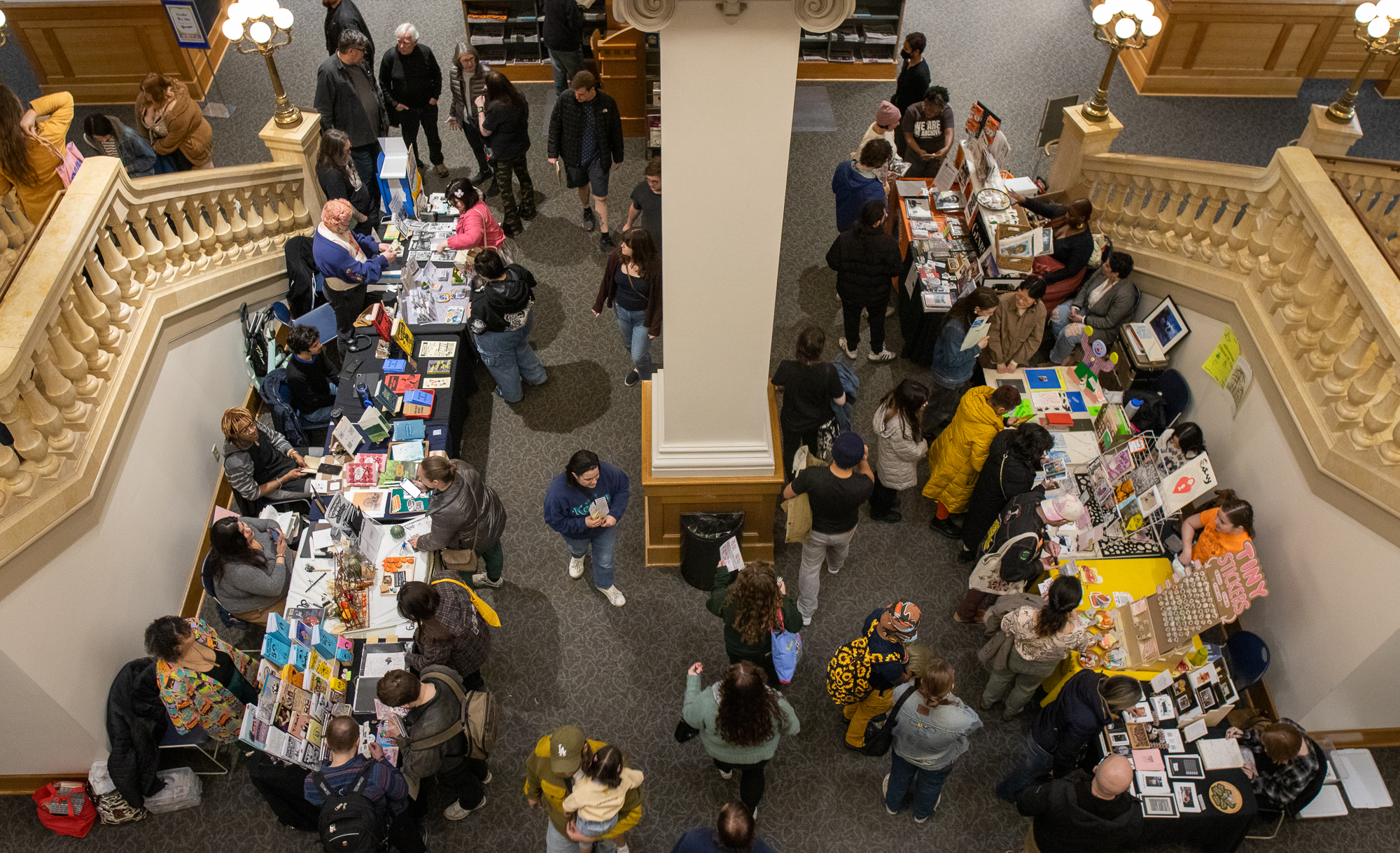
Skyler had never spent more than five minutes inside a Milwaukee Public Library before Saturday. It was Record Store Day, and he was moving through the city when Zine Fest crossed his path at the Central Library — a building he had passed many times without really entering. He didn’t know exactly what a zine was. He wandered the floor, kept a respectful distance from the tables, picked up a Spider-Man Valentine, found his friend Mortz selling a small comic and bought one, and found a tiny blank book.
Somewhere in those two hours, without anyone explaining it to him, he understood something. “You kind of got to post everything online on Instagram,” he said, “and it’s just so fleeting. It’s cool for like a good 20 minutes and then that feeling’s gone. People just keep scrolling and it’s kind of lost. It doesn’t stick with you like physical media does.”
The 18th annual Milwaukee Zine Fest, a major gathering of independent creators that takes six months to plan and is free to attend, drew 124 vendors from around the country to the Central Library on April 18, 2026. Founded in 2008, the event reached a milestone this year — not in crowds overflowing outside, but in every vendor table being occupied. More people wanted in than the space could hold.
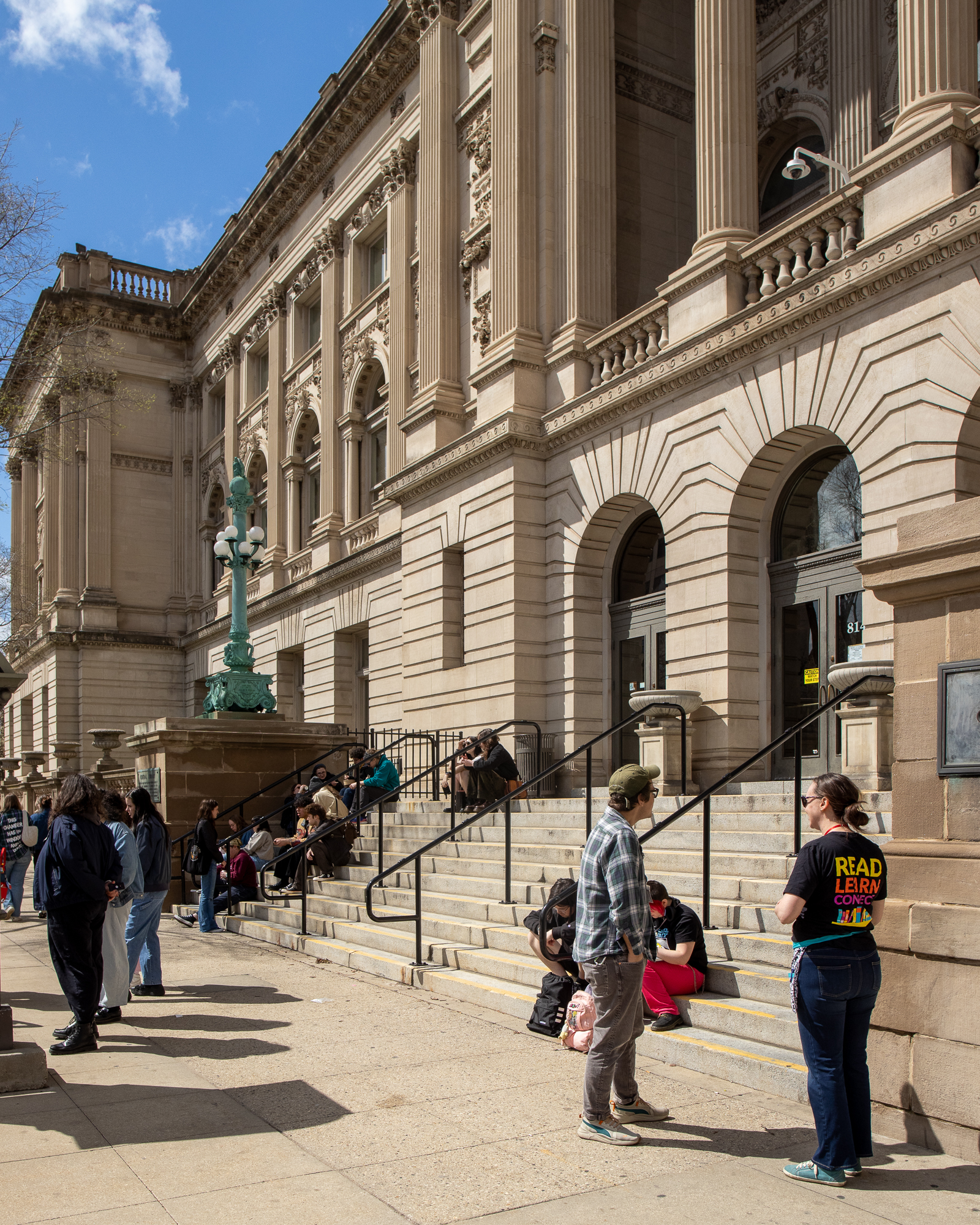
Tucked into a corner room on the second floor, Lisa Floading has several tables lined with typewriters from different eras and watches what happens when people sit down. They type, they get to the end of the line, they stop. They look up. They ask what to do. “We call it a return key,” she tells them, “because we used to have to return the carriage.” The arm moves. The paper moves. The fingers get tired in a way they don’t on glass. Floading runs a small business called Platen Place — she owns 65 machines, maintains and repairs them, and brings them into rooms like this one so people can feel what it costs to make a sentence. People wrote whole books on these, she reminds them. One key at a time.
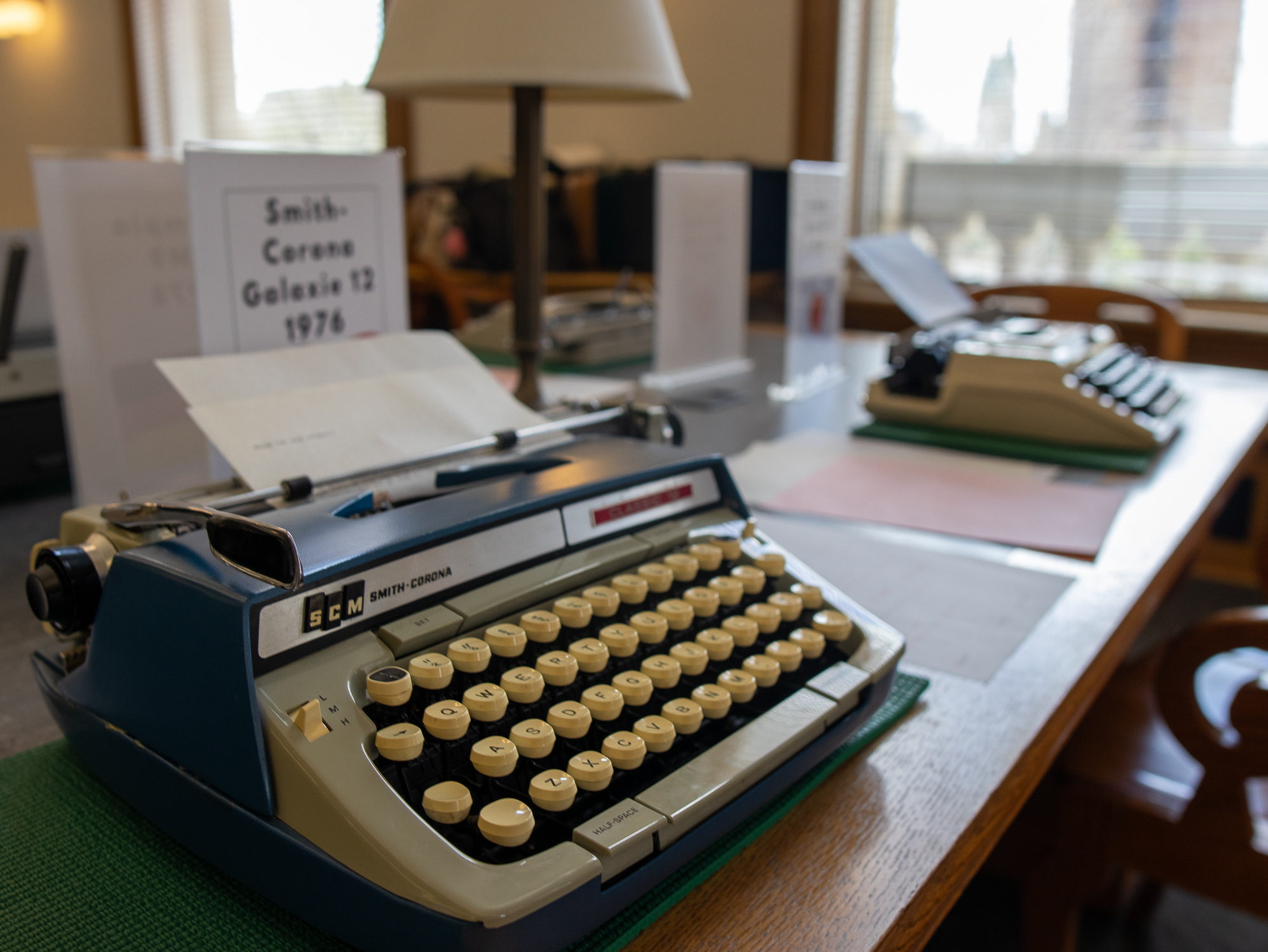
Ollie Battista is doing something similar with ink. Battista is part of Union Print, a screen printing collective that started as the UWM Print Club and kept going after four of its members graduated because stopping felt like a waste of something real. The process is accessible, Battista explains to anyone who wanders close enough to ask — you prepare your materials, you pull the print, you make another, and the object that results moves home with the person who takes it, carrying the message. “By doing this process and having it be kind of fast and accessible for people,” Battista said, “it provides a way to connect with them — and spread a message in a way that’s tactile.”
Floading has a word for what both of them are doing, used almost in passing: craftivism. Not resistance so much as insistence — on being somewhere, doing something, with your hands, with other people present. She has watched it spread in recent years across collector communities, people reaching back toward things that ask something of the body. “Not that we’re all going to become Luddites,” she said, “but I think people are recognizing that — I want to listen to music, so I’m going to play a record. I’m going to write, I’m going to work on the machine that’s for that.”
TRUE Skool has been bringing young people to Zine Fest for four years for exactly that reason. Shalina S. Ali, Co-Executive Director, describes what the fest gives their students that most environments can’t replicate: a live room where the work has to stand on its own in front of strangers who owe you nothing. “To be able to have an event like Zine Fest where we get to actualize the training that follows the creation of art,” Ali said, “is a really important opportunity for our young people to exercise their ability to represent their art, to speak about the organization, to just be able to talk to different people.” The Bindery, which served as the organizational steward of the fest for seven years and ran zine-making workshops with TRUE Skool students, closed in 2025. TRUE Skool still came — because what they were after was never the organization. It was the room, the one where you put something you made in front of a stranger and find out if it holds.
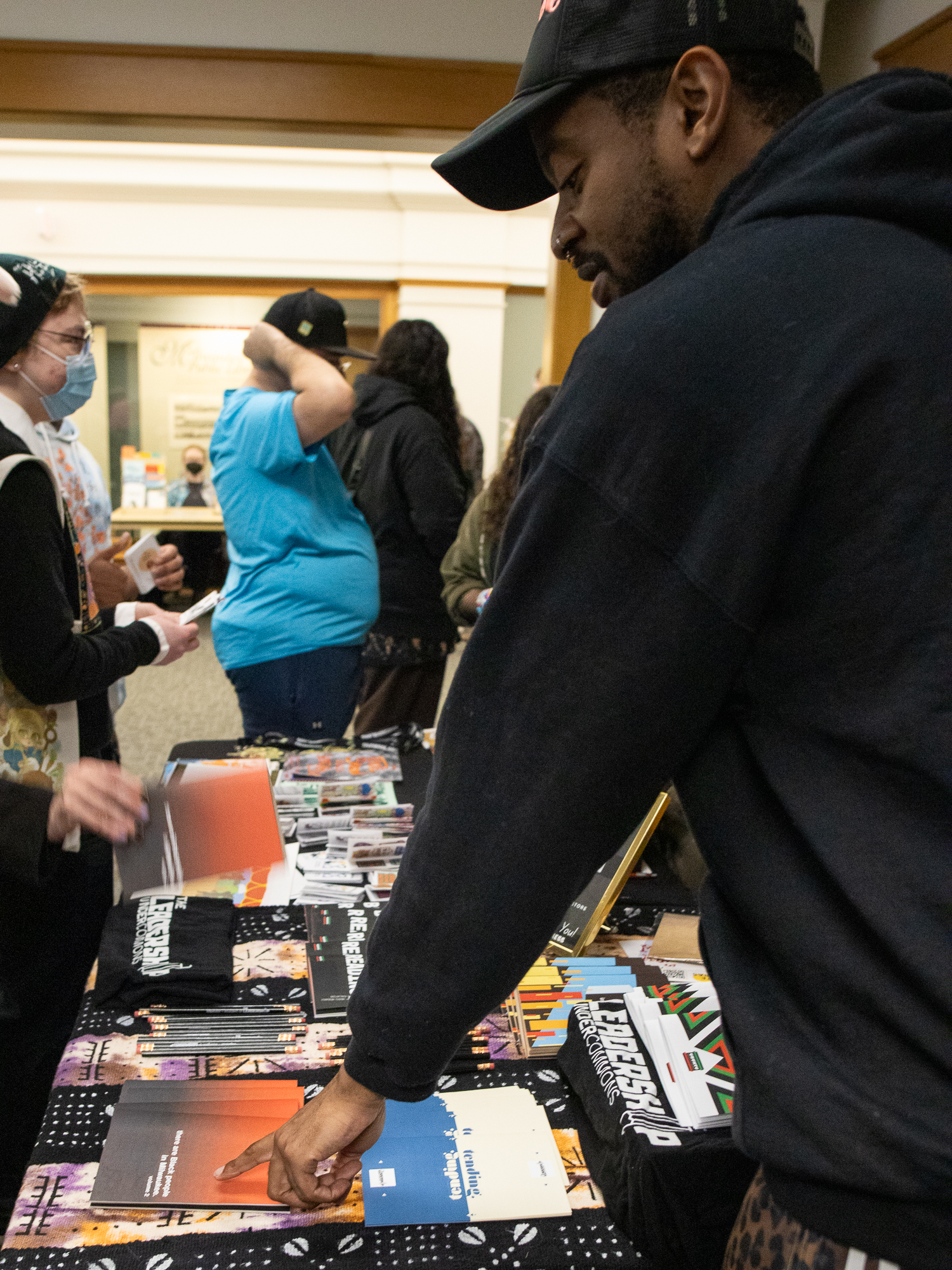
Skyler thought about what that would feel like. He had kept his distance from the vendors all day — it felt too intimate, he said, to walk up to someone’s art and decide not to buy it — but standing there he turned the question over. “I think I could,” he said. “But it would be very vulnerable to put yourself out there and be like, this is worth someone’s money.”
“It would be very vulnerable to put yourself out there and be like, this is worth someone’s money.” — Skyler, first-time attendee
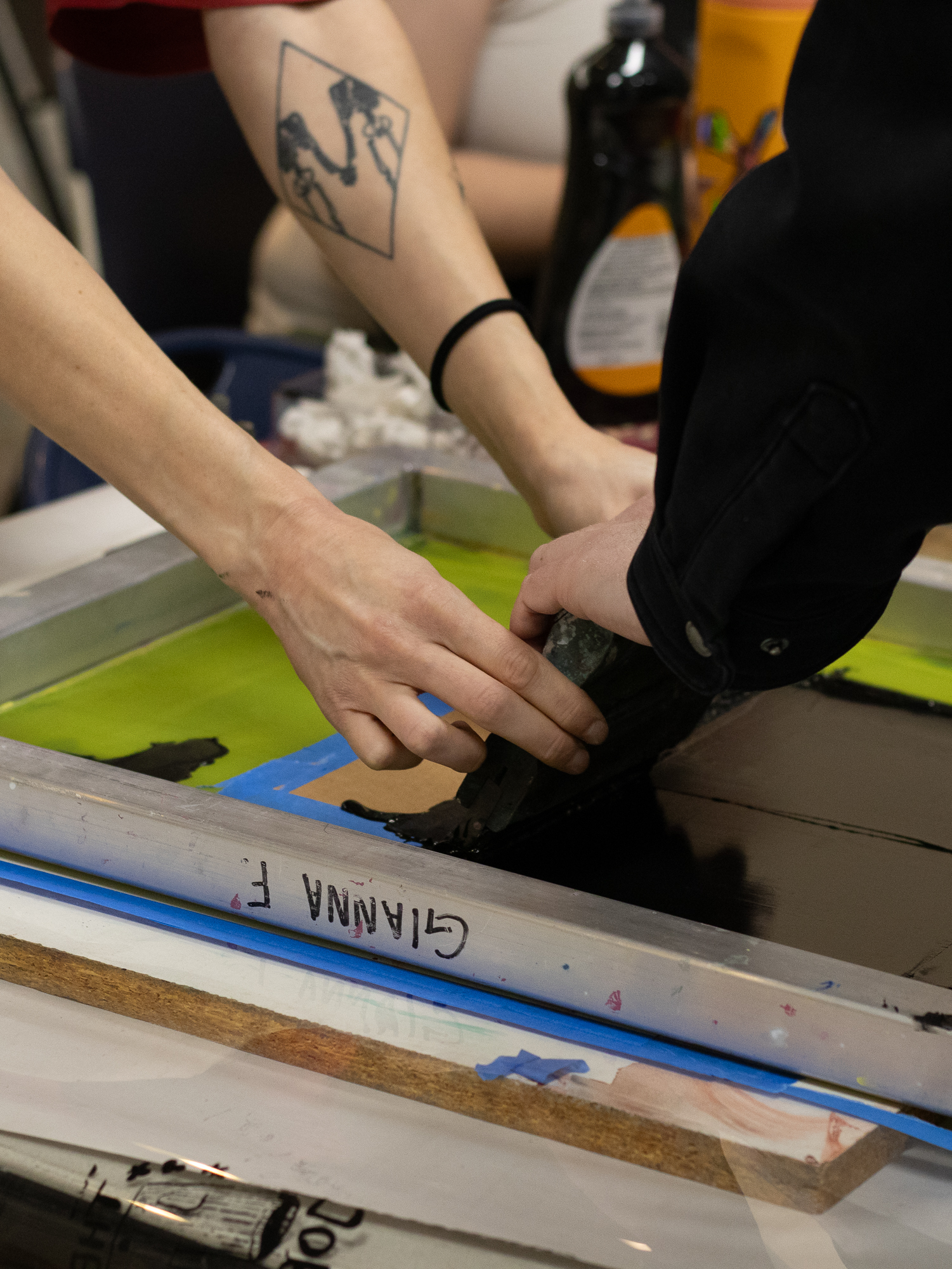
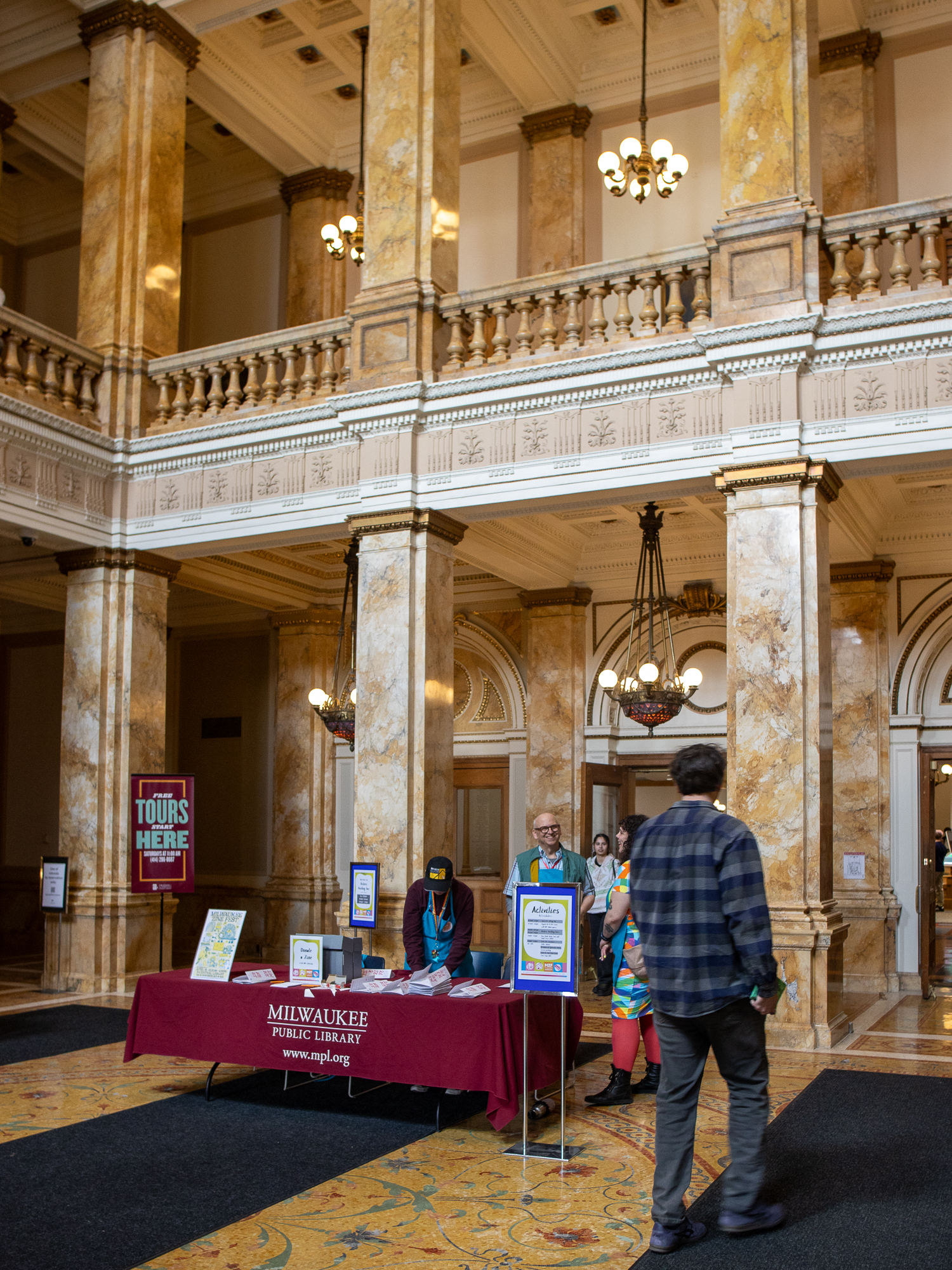
He noticed the architecture. He saw people lining up for building tours, a dozen at a time, discovering a landmark that had been standing since 1898. The library holds services most people don’t know exist — digital lending, rare collections, reference staff who field questions that almost never get asked — and Zine Fest fills it with people who didn’t come to use any of it, and then do. “It would be hard to put that somewhere else,” Skyler said.
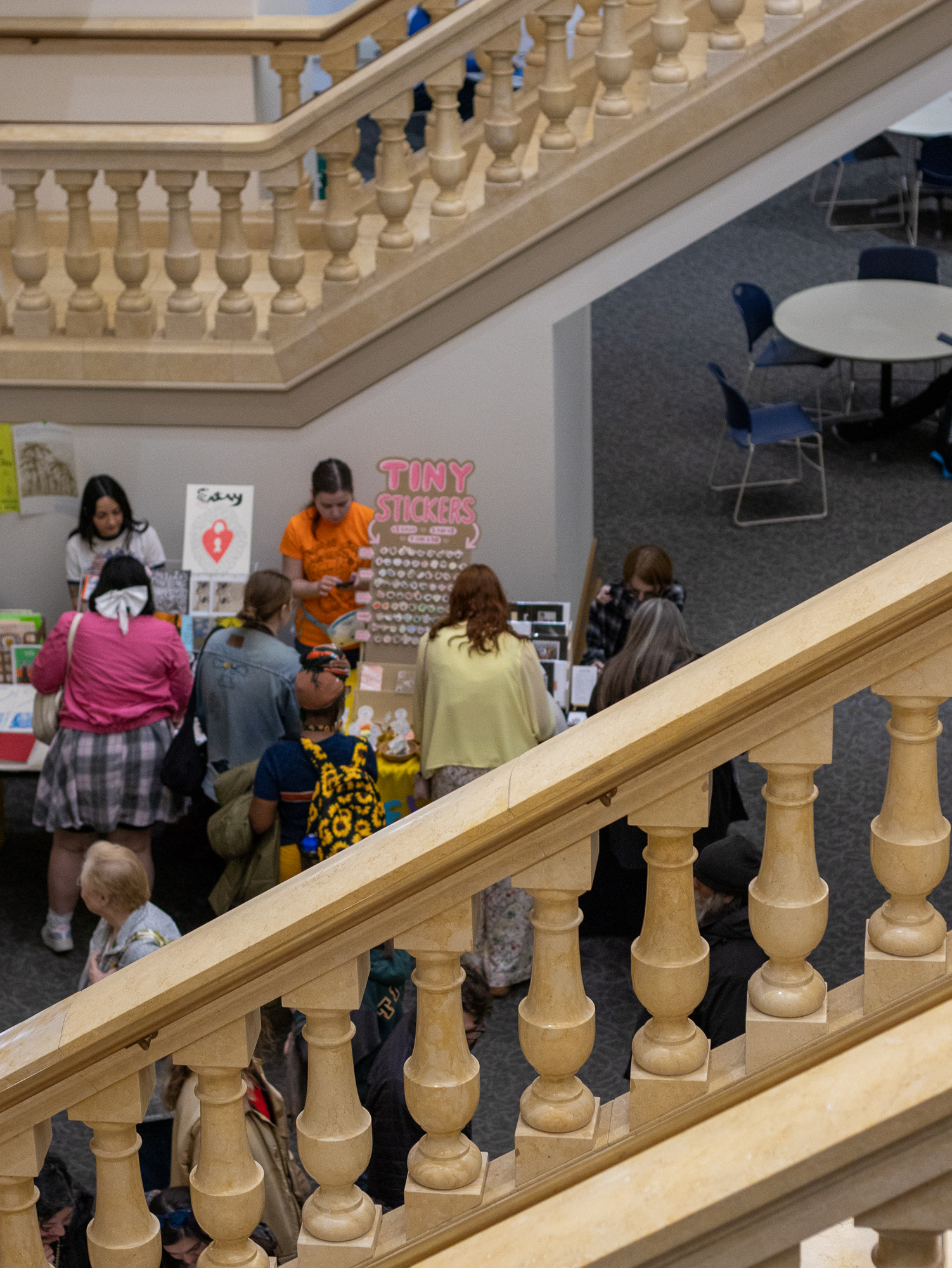
Christine Rosa would agree, though she is sitting with a harder version of that thought. Rosa is part of the Milwaukee Zine Consortium, the volunteer-led organization that took stewardship of the fest after The Bindery closed and kept it running through an organizational loss mid-cycle, with volunteers from half a dozen groups, on six months of planning, for one day a year, free to everyone who walks through the door. This year the lottery that governs vendor selection cut deeper than it ever has — the largest public library in Milwaukee wasn’t big enough. The demand, as those who organized the day described it, was heartwarming and painful in equal measure.
Vendors came from across the country. One hundred and twenty-four tables. One day. One building. No more room.
“You kind of got to post everything online on Instagram and it’s just so fleeting. It’s cool for like a good 20 minutes and then that feeling’s gone. People just keep scrolling and it’s kind of lost. It doesn’t stick with you like physical media does.” — Skyler, first-time attendee
Skyler’s day wove between city spaces the way Milwaukee allows — record stores in the morning, a 128-year-old library in the afternoon, his friend’s comic in hand by the time he left. He found what he found because he stepped into a building he had never truly entered, joining a room full of people who had made something and needed a place to share it.
Leave a Reply