A Bay View tavern that has spent 150 years giving working people a place to gather did it again on a Tuesday in June.
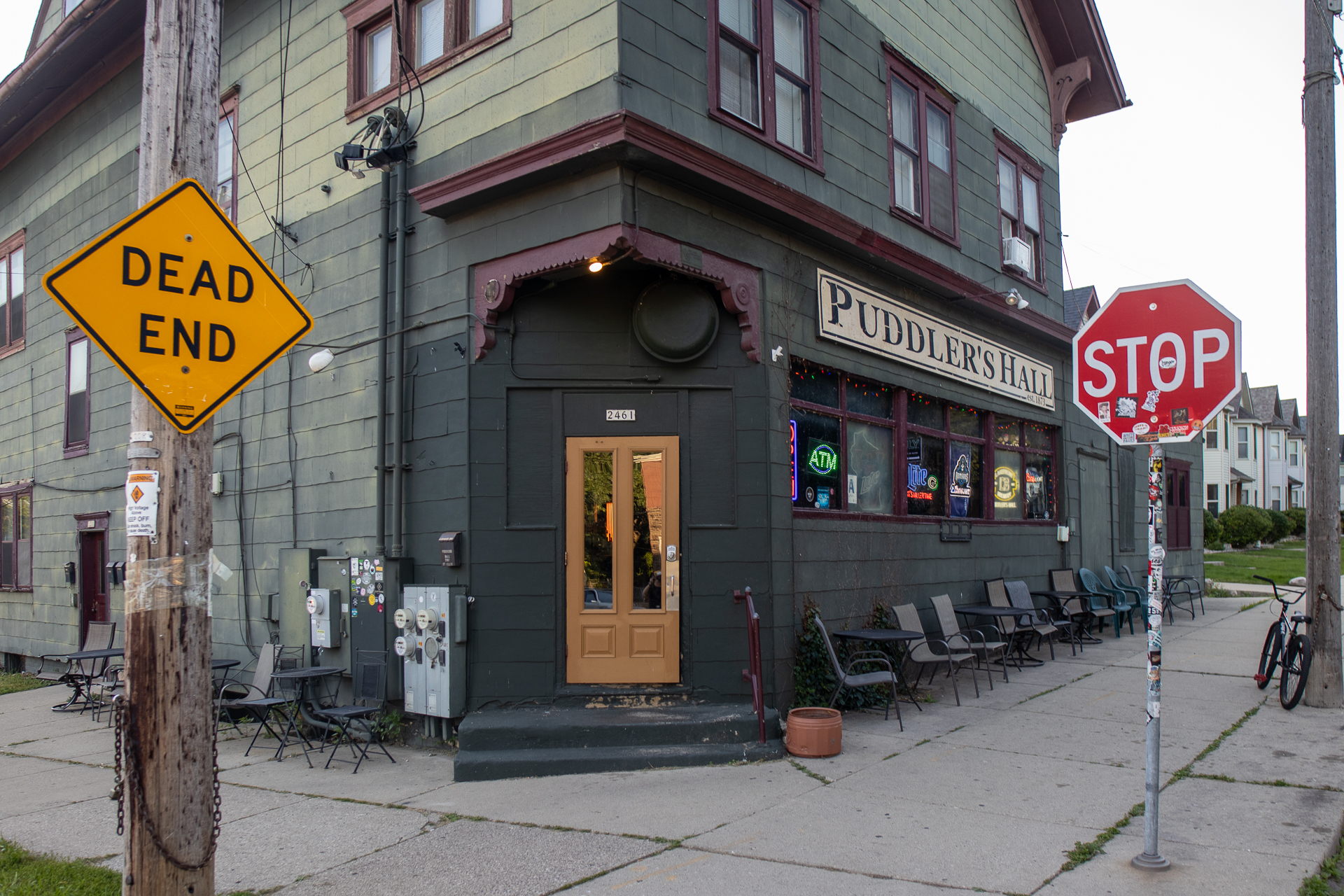
Puddler’s Hall is the second-oldest tavern in Milwaukee. It was not built to be a tavern.
The forest-green building at 2461 S. St. Clair St. in Bay View was built in 1872 by the puddlers and boilers of the Milwaukee Iron Company as their union hall. Puddlers were the skilled workers who turned pig iron into the wrought iron that left the Bay View rolling mill by the mile. The work was brutal: twelve-hour days, six-day weeks, furnaces that ran hotter than 150 degrees. The hall, two blocks from the mill, was where those workers met. The Milwaukee Sentinel in 1911 called it the center of the village’s social life. Lectures, debates, concerts, classes, and meetings all happened in the big room on the first floor.
In 1886, that room was part of something larger. Bay View’s iron workers joined the national movement for an eight-hour workday. By then, the mill two blocks away had become the North Chicago Rolling Mill, and on May 5, around 1,500 marchers approached it to pull the city’s last holdout plant into the strike. Governor Jeremiah Rusk had called in the state National Guard. The troops fired into the crowd, killing seven, including a boy and a man shot while tending his garden. The slogan from that fight is still painted above the tavern’s front windows: eight hours for work, eight hours for sleep, eight hours for what you will.
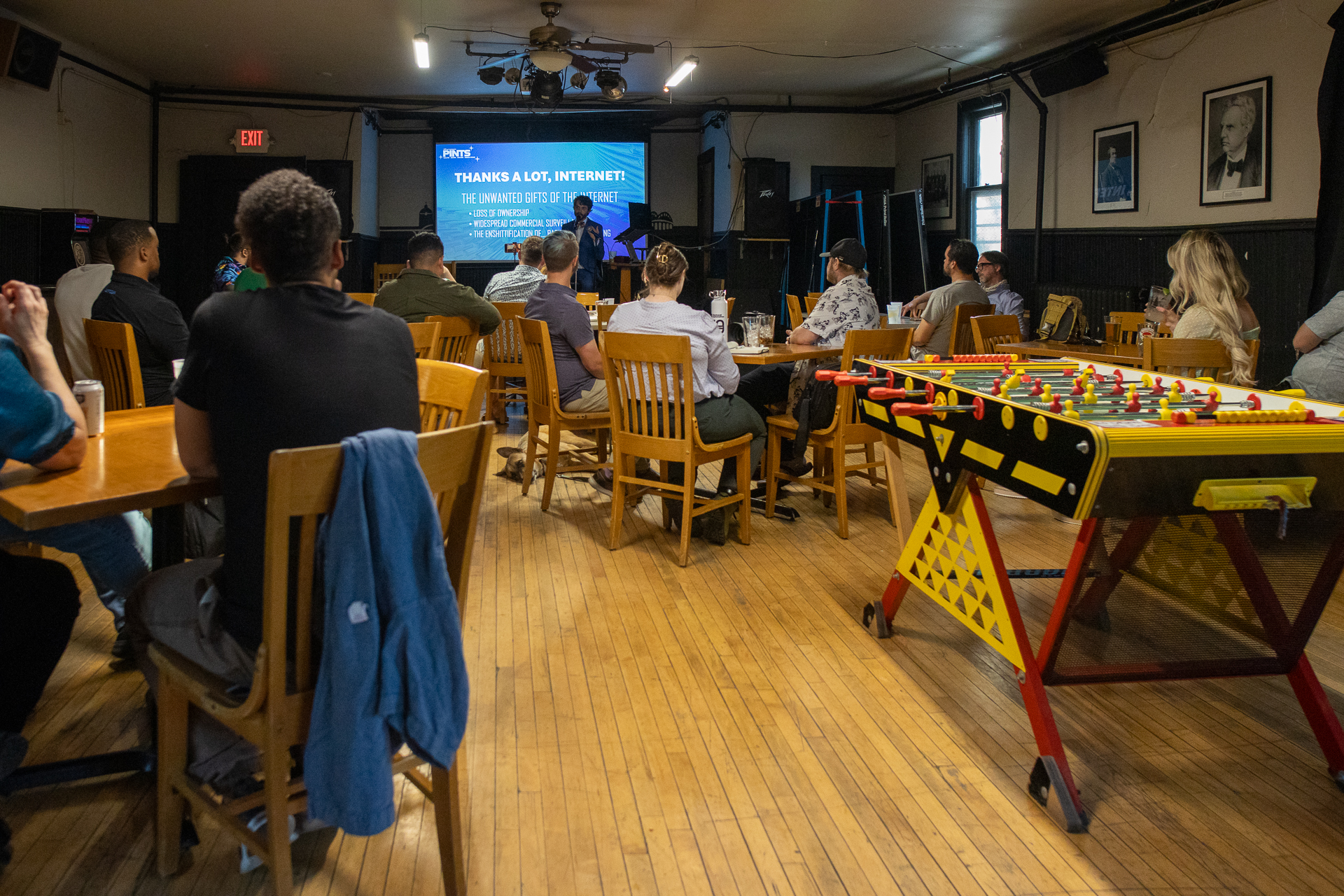
On a Tuesday night in June, the big room filled again.
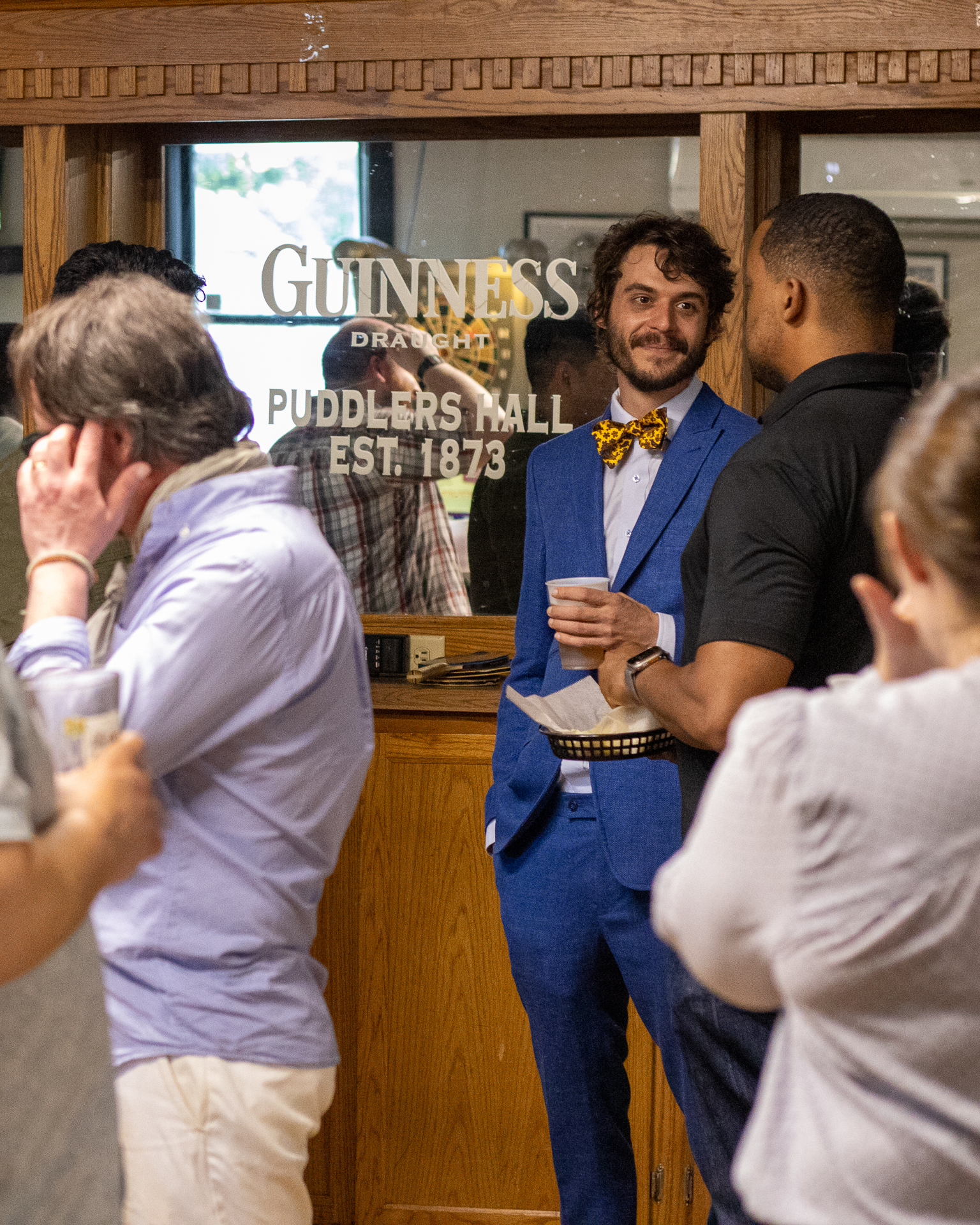
The occasion was a new event called PINTS, put on by NetForward, an IT company. The subject was technology and work, and how people feel about both right now. But the shape of the night was older than its subject. People came in, got a beer, and talked.
Steb Scheele ran the room. He told the crowd the event came out of a feeling that the work he and his business partner were doing had stopped feeling meaningful, and that there was nowhere people were talking honestly about what new technology actually does to a working life. So they made a place to do it. “We want to get people from all walks of life to come and be here,” he said.
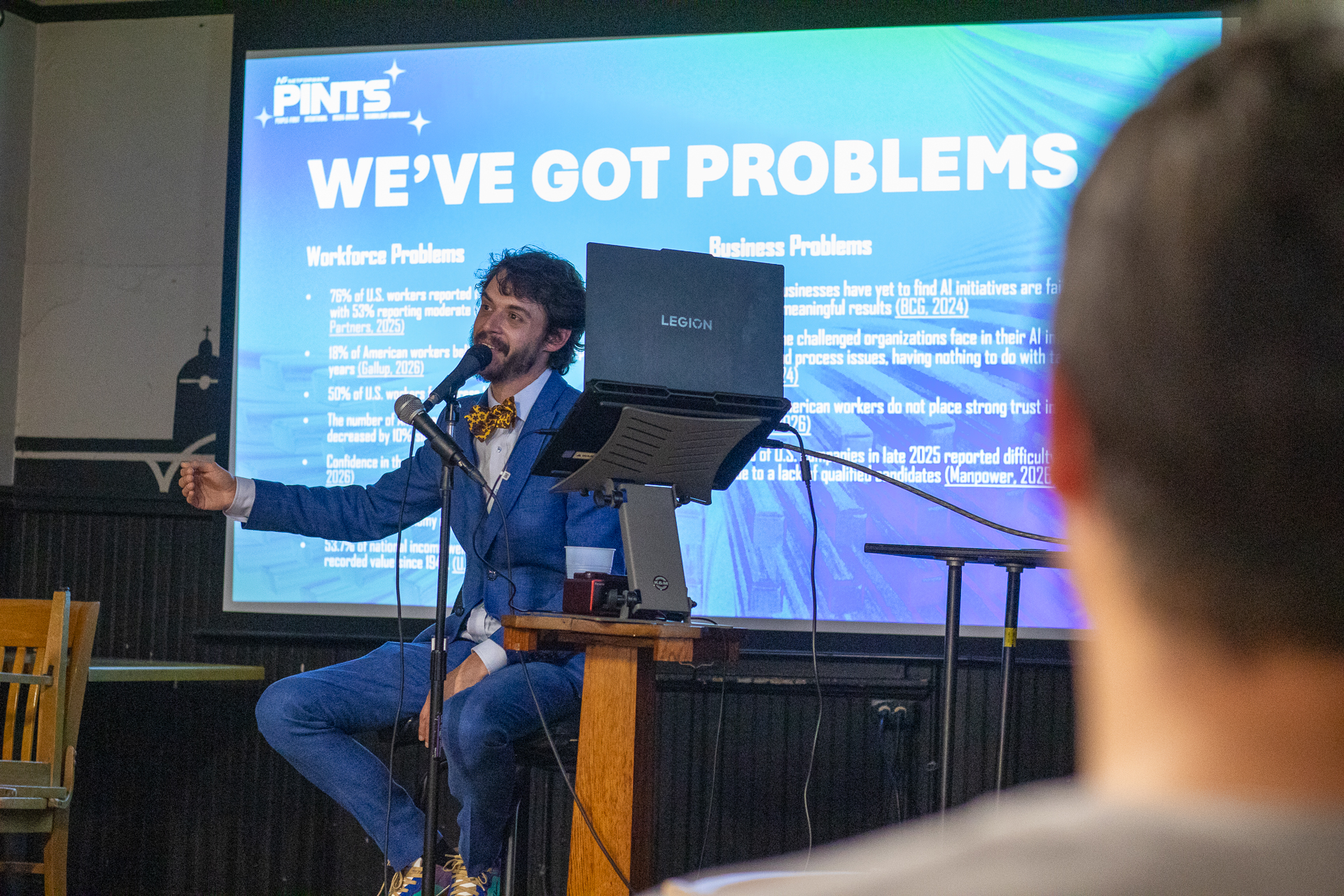
Early on, he acknowledged the building. He had not known its history when he booked it, he said, and then he learned whose hall he was standing in. He told the room about the puddlers and the strike. “It’s kind of part of what we’re trying to do here for our community,” he said, in the room where they had once gathered to do exactly that.
It worked the way the room has always worked. Scheele talked, then handed it over. A teacher described what the last year had done to her classroom. Business owners talked about why they still answer the phone. People who had never met agreed and disagreed. Nobody resolved anything. That was not the point.
“We want to get people from all walks of life to come and be here.” — Steb Scheele, NetForward
The puddlers had been made to keep the pace of the machines around them, twelve hours at a stretch, and they organized in this room to take some of that time back. The eight-hour day they marched for did not arrive for decades, and by the time it did, a larger change had passed them by. The trade itself was mechanized away, the craft replaced by steelmaking that needed far fewer hands, and the mill closed, and the work was gone.
What presses on the work keeps changing. The people do not. The room that filled in June was asking whether AI is about to do to their work what mechanization did to the puddlers. One person there had already been told to train the software that replaced them. By 2025, only one in five workers worldwide was engaged in their job.
Different century, different machine, same room, same instinct.
The trade the puddlers worked is gone, the mill is gone, the men themselves long gone. What remains is the room, and the old habit of filling it when something has to be said.